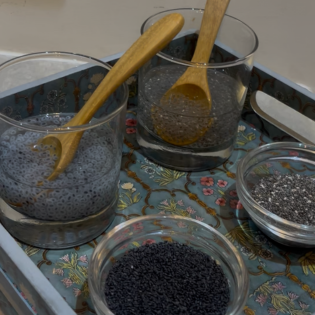
Chia Seeds vs Sabja Seeds | Difference Between Chia and Basil Seeds | Healthy Seed Comparison | Superfood Seed Guide
![Renu Dalal blogs]()
Chia Seeds vs Sabja Seeds: What’s the Difference?
- Chia seeds and sabja seeds (also known as basil seeds) are often confused
- because they look similar and both swell when soaked in water. However, they come
- from different plants and vary in texture, usage, and nutritional benefits. Both are
- excellent additions to a healthy diet, especially in drinks and light meals, but
- understanding their differences can help you use them better.
Nutritional Content (Per 100g) :
- Chia Seeds -
- Chia seeds provide approximately 486 calories, 31 grams of fats, 17 grams of
- protein, 42 grams of carbohydrates, and 34 grams of fibre. They are extremely rich in
- omega-3 fatty acids, making them great for heart and brain health. They also contain
- calcium, iron, and antioxidants.
-
- Sabja Seeds (Basil Seeds) -
- Sabja seeds contain around 480 calories, 25 grams of fats, 14 grams of protein, 43
- grams of carbohydrates, and 22 grams of fibre. They are known for their cooling
- properties and are rich in fiber, iron, and plant compounds that support digestion and
- detoxification.
Key Differences Between Chia Seeds and Sabja Seeds -
1.Source and Origin
- Chia seeds come from the plant Salvia hispanica, which is native to Central America.
- Sabja seeds come from sweet basil (Ocimum basilicum), commonly used in Indian
- kitchens. Though they look alike, they are botanically different.
2. Soaking and Texture -
- Chia seeds need to be soaked for at least 20–30 minutes to fully absorb water and
- develop a gel-like consistency. Sabja seeds swell much faster—within 5–10
- minutes—and form a jelly coating around a black center. Sabja seeds tend to have a
- softer bite compared to chia.
3. Taste and Usage -
- Chia seeds have a very mild, almost neutral taste, making them versatile for
- smoothies, puddings, oats, and baking. Sabja seeds are commonly used in Indian
- drinks like falooda, sherbets, and lemon water, adding a refreshing texture.
4. Nutritional Focus -
- Chia seeds are higher in omega-3 fatty acids, protein, and fibre, making them
- excellent for heart health, weight management, and sustained energy. Sabja seeds
- are slightly lower in fat but are known for their digestive and cooling benefits,
- especially in hot weather.
5. Health Benefits -
- Chia seeds help improve heart health, support weight loss, and provide long-lasting
- energy due to their nutrient density. Sabja seeds are great for digestion, reducing
- acidity, and cooling the body. They are often used in summer diets to prevent heat-
- related discomfort.
-
- While chia seeds and sabja seeds may look similar, they serve slightly different
- purposes in your diet. Chia seeds are more nutrient-dense and versatile for everyday
- meals, while sabja seeds are ideal for hydration, digestion, and cooling effects.
- Including both in your diet can give you a balance of nutrition and seasonal benefits,
- making your meals both healthy and refreshing.