PUMPKIN SEEDS
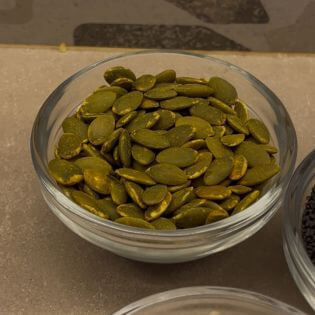
In the world of wholesome nutrition, few tiny foods pack as much punch as pumpkin seeds. Often overlooked as a mere after-thought of carving or cooking pumpkins, they’re actually a “super-seed” in their own right—brimming with essential nutrients, beneficial plant compounds, and versatile ways to enjoy them.
Nutritional Content of Pumpkin Seeds (Approx 30 g)
- Calories: ~160 kcal
- Carbohydrates: ~4–6 g
- Protein: ~8–9 g
- Fat: ~12–14 g
- Fibre -2g
Rich in Antioxidants & Nutrients
- Pumpkin seeds are loaded with minerals like magnesium and zinc, as well as antioxidants such as phenolic compounds and carotenoids.
- These nutrients play a role in protecting cells from oxidative stress and supporting
- general wellness.
Heart & Metabolic Health
- Thanks to their healthy fats, magnesium and fiber content, pumpkin seeds have been associated with support for cardiovascular health, better
- blood sugar balance and improved cholesterol profiles.
- Sleep, Hormone & Reproductive Support - Because pumpkin seeds contain tryptophan (a sleep-supporting amino acid), zinc and magnesium, they may help with sleep quality and hormonal functions—including reproductive health.
Bone & Immune Health
- The presence of magnesium and zinc, among other trace
- elements, means pumpkin seeds contribute to bone formation and immune system
- support.
Easy to Incorporate
- One of the best things about pumpkin seeds is how versatile they
- are: snack roasted, add to salads, yogurt, smoothies, baked goods—lots of options.
- Pumpkin seeds may look small, but they punch above their weight: nutrient-dense,
- plant-based protein, healthy fats, and mineral powerhouses all in one. Whether you’re
- sprinkling them on top of your breakfast bowl or snacking on them straight, they’re a
- smart addition to a balanced diet—and a delicious one too.