Types of Seeds | Pumpkin Watermelon Sunflower Seeds | Healthy Seeds Guide | Edible Seeds
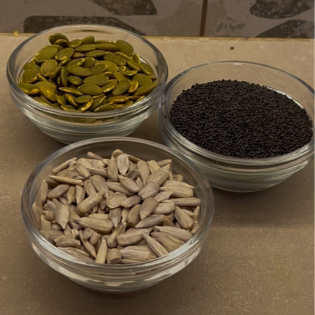
Sunflower vs Pumpkin vs Watermelon Seeds: What’s the Difference?
- Seeds may be tiny, but they’re packed with nutrients that can make a big difference to
- your overall health. Among the most commonly consumed are sunflower seeds,
- pumpkin seeds, and watermelon seeds. Each of these offers a unique combination of
- nutrients, textures, and health benefits. Including a mix of these seeds in your diet can
- add both crunch and powerful nutrition to your meals.
Nutritional Content (Per 100g)
- Sunflower Seeds:
- Sunflower seeds provide approximately 584 calories, 51 grams of fats, 21 grams of
- protein, 20 grams of carbohydrates, and 8.6 grams of fibre. They are rich in healthy fats,
- especially vitamin E and antioxidants, making them great for skin and heart health.
- Pumpkin Seeds:
- Pumpkin seeds contain around 559 calories, 49 grams of fats, 30 grams of protein, 11
- grams of carbohydrates, and 6 grams of fibre. They are one of the best plant-based
- protein sources and are loaded with magnesium, zinc, and iron.
- Watermelon Seeds:
- Watermelon seeds offer about 557 calories, 47 grams of fats, 28 grams of protein, 15
- grams of carbohydrates, and 4 grams of fibre. They are highly nutritious and rich in
- protein, healthy fats, and essential minerals like magnesium and iron.
Protein Content
- Pumpkin seeds have the highest protein content among the three, making them ideal
- for muscle repair and vegetarian diets. Watermelon seeds also offer a high protein
- boost, while sunflower seeds contain slightly less but still contribute well to daily intake.
Fat Profile and Skin Benefits
- Sunflower seeds are richest in healthy fats and vitamin E, which supports glowing skin
- and protects cells from damage. Pumpkin and watermelon seeds also contain healthy
- fats but are more focused on mineral content than skin benefits.
Mineral Richness
- Pumpkin seeds stand out for their high levels of magnesium, zinc, and iron, which are
- essential for immunity, bone health, and energy production. Watermelon seeds also
- provide good mineral content, while sunflower seeds are especially high in vitamin E.
Fibre Content and Digestion
- Sunflower seeds contain the highest fibre among the three, supporting better digestion
- and gut health. Pumpkin seeds offer moderate fibre, while watermelon seeds have
- slightly lower fibre content but are still beneficial.
Taste and Usage
- Sunflower seeds have a mild, nutty taste and are great for snacking or adding to salads.
- Pumpkin seeds are slightly chewy and earthy, commonly used in trail mixes or roasted
- snacks. Watermelon seeds are crunchier and often roasted, making them a unique and
- nutritious snack option.
- Sunflower, pumpkin, and watermelon seeds each bring their own nutritional strengths to
- the table. Sunflower seeds are great for skin and antioxidants, pumpkin seeds excel in
- protein and minerals, and watermelon seeds offer a balanced mix of protein and healthy
- fats. Including a variety of these seeds in your daily diet ensures a wider range of
- nutrients, making your meals both healthier and more satisfying.